


Soil Mechanics For Road Engineers
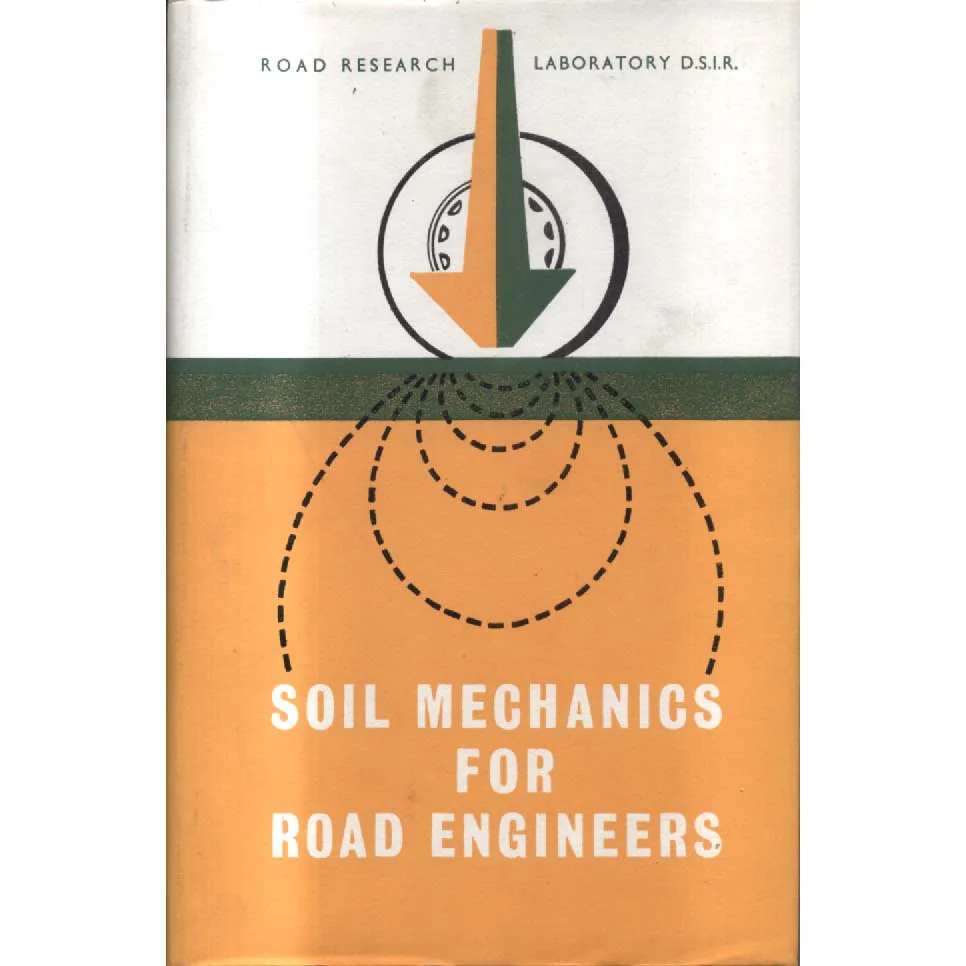
Publisher: HMSO
Format: Hardback
ISBN: none
Pack your clipboard, calibrate your boots, and prepare to make friends with dirt. Soil Mechanics for Road Engineers (1964) by the Department of Scientific and Industrial Research – Road Research Laboratory (HMSO) is the sober, mud-scented classic that turns the ground beneath your tyres into a set of courteous equations. It’s the book that looks at a puddle and sees permeability, at a rut and sees shear failure, and at a cheerful hedge and sees a drainage liability with opinions.
Here, the British roadway is not romance; it’s granular reality—graded, compacted, drained, and verified by someone with a nuclear density gauge and the self-esteem of clay at optimum moisture content. The prose is lab-coat clear, the diagrams reassuringly rectangular, and the conclusions unflappable: if you don’t understand your soil, your pavement will understand you—briefly, then crack.
What’s inside (wipe your boots before turning pages):
-
Classification without tears: particle-size curves that behave, plasticity charts that gossip, and the Atterberg limits—liquid, plastic, shrinkage—doing their tidy circus act.
-
Compaction as gospel: Proctor and modified Proctor, OMC vs MDD, rolling out density like pastry until the voids beg for mercy.
-
Strength where it counts: CBR with attitude, triaxial tests that make Mohr–Coulomb purr, and shear boxes proving that friction really is a lifestyle.
-
Consolidation & settlement: Terzaghi tut-tutting from the margins while time does what time does to embankments that didn’t read chapter four.
-
Drainage, the quiet hero: capillary rise demystified, filter criteria that refuse to let fines elope, and longitudinal fall that saves Sunday mornings.
-
Frost heave & seasonal mischief: because winter has a personality and it hates subgrades that pretend water is optional.
-
Design notes with backbone: subgrade → sub-base → base → surfacing like a polite layer cake, each tier justified and nobody skipping the drainage.
The tone is that classic RRL blend: measured, meticulous, faintly parental. It doesn’t shout; it specifies. Every graph has a reason, every symbol earns its keep, and every recommendation carries the quiet menace of empirical evidence. Read three chapters and you’ll start side-eying verge ditches, quoting plasticity index at picnics, and diagnosing potholes as if they were patients.
Why this copy? It rolls in from the gloriously plain-spoken emporium Crappy Old Books in Condition: Good—translation: sound binding, clean pages, a touch of honest shelf-rub. The sort of HMSO volume that has lived near a drawing board, possibly met a contour plan, and survived to brief again. No coffee catastrophes, no tragic delamination—just a robust manual ready to be consulted in office, site hut, or mildly judgmental Land Rover.
Vital stats for your site file:
-
Title: Soil Mechanics for Road Engineers
-
Author: Department of Scientific & Industrial Research – Road Research Laboratory
-
Publisher: HMSO, 1964
-
ISBN: none (older than barcodes; newer than Roman roads)
-
Condition: Good (upright, legible, confidently granular)
-
Vendor: Crappy Old Books—the name shrugs; the stock compacts to spec.
Buy it for the tests; keep it for the temperament. This is the handbook that replaces hunches with moisture-density relationships, swaps folklore for drainage gradings, and gently insists that your pavement’s future was decided the day you met the subgrade with a roller and a plan. After a few pages you’ll be speaking fluent phi and c, weighing rainclouds with your eyes, and treating soil not as “dirt” but as the most opinionated structural material you will ever meet. Build accordingly.
Keep browsing: See more Academic books Other books by Department of Scientific Industrial Research - Road Research Laboratory
